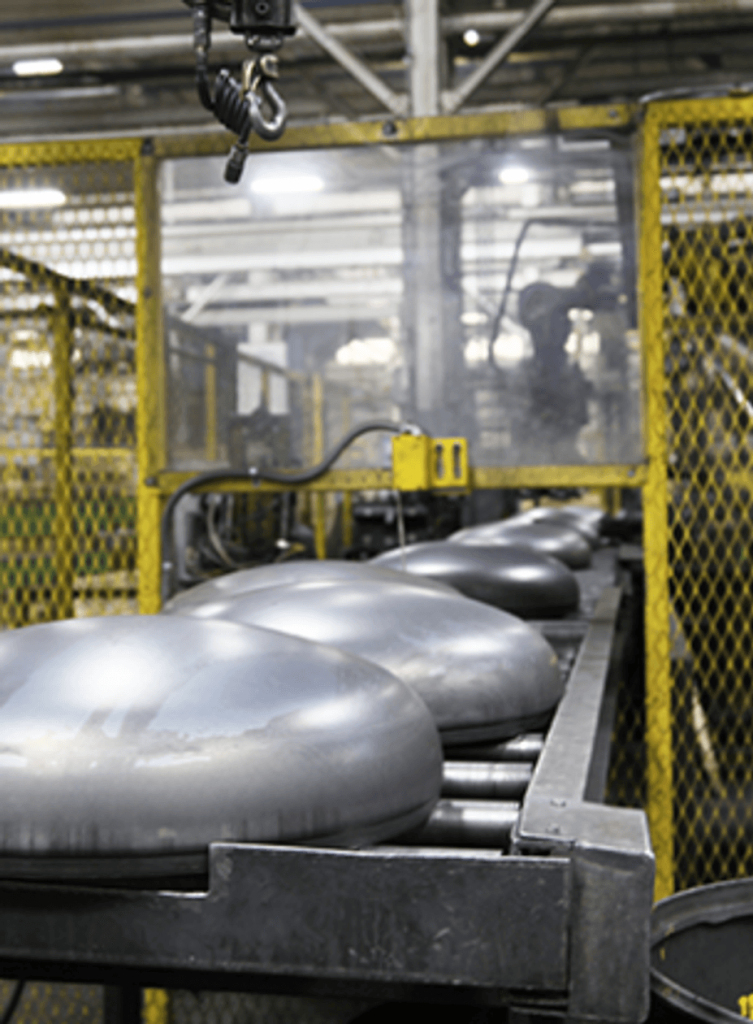


In today’s manufacturing environment, customers demand shorter lead times, lower costs, and consistent quality. One of the most effective ways manufacturers can meet these expectations is by integrating secondary operations directly into the production flow. By running metal stampings in line with processes such as washing, joggling, laser cutting, welding fixtures, and assembly operations, manufacturers can create a more efficient and reliable supply chain.
What Is In-Line Secondary Processing?
In-line secondary processing occurs when value-added operations are performed immediately after—or as part of—the primary stamping process rather than shipping parts to separate facilities or work centers. Instead of handling parts multiple times, manufacturers move seamlessly from forming to finishing.
This integrated approach transforms a stamped component into a production-ready part.
Reduced Handling and Transportation
Every time a part is moved, stored, or transported, there is risk and cost involved. Additional handling can lead to:
- Surface damage
- Dimensional variation
- Lost or mixed parts
- Increased labor costs
By processing parts in line, manufacturers significantly reduce material movement, preserving quality while lowering labor and logistics expenses.
Faster Lead Times
Customers increasingly operate with lean inventories and expect rapid delivery. Integrating secondary operations into the manufacturing flow eliminates delays associated with shipping parts between suppliers or waiting in queues at separate work centers.
When washing, laser cutting, or welding preparation occurs immediately after stamping, parts move through production faster and reach customers sooner.
Improved Quality and Consistency
Performing multiple operations under one roof creates tighter control over the manufacturing process. Quality teams can monitor dimensions, surface conditions, and process variables throughout production.
Examples include:
- Washing systems that remove lubricants prior to downstream operations
- Laser-cut features added with precise positioning from stamped datums
- Joggling operations that ensure accurate fit-up for assembly
- Welding fixtures that maintain repeatable alignment
The result is greater consistency from part to part and lot to lot.
Lower Total Cost of Ownership
While piece price often receives the most attention, the true cost of a component includes transportation, inventory, handling, quality inspections, and supplier management.
A supplier capable of delivering a finished or near-finished component can help customers reduce:
- Supplier complexity
- Administrative burden
- Freight expenses
- Work-in-process inventory
- Manufacturing lead times
Consolidating operations frequently lowers the total landed cost—even if individual processes appear similar on paper.
Better Support for Automation and Lean Manufacturing
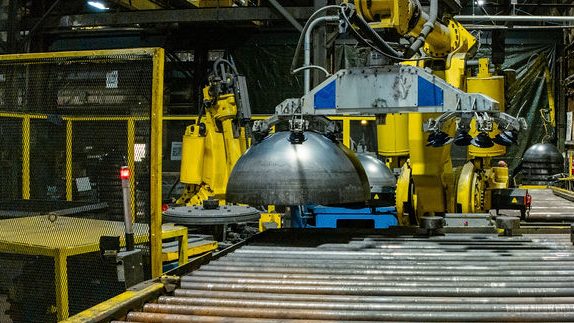
Integrated processing aligns naturally with lean manufacturing principles. Eliminating unnecessary movement and reducing work-in-process inventory creates a smoother production flow.
In-line processing also enables greater automation, allowing manufacturers to improve throughput while maintaining high quality standards.
For industries such as pressure vessels, energy, transportation, and heavy equipment, these efficiencies can translate into substantial cost savings over the life of a program.
A Strategic Manufacturing Partner
Choosing a supplier with integrated capabilities means more than purchasing a stamped component—it means partnering with a manufacturer that can deliver complete solutions.
Whether the process includes metal forming, washing, joggling, laser cutting, welding fixtures, machining, or assembly, vertically integrated manufacturing reduces complexity and helps customers bring products to market faster.
As supply chains continue to evolve, manufacturers that offer in-line secondary processing are uniquely positioned to deliver the speed, quality, and value customers expect.
At Compco, we believe that manufacturing excellence extends beyond the press. By integrating value-added operations into our production flow, we help customers reduce costs, improve quality, and simplify their supply chains—one component at a time.